
 English
Core positioning: A CAPEX/OPEX comparison framework for procurement and engineering teams evaluating 1 MW+ deployments.
1. Deconstructing the cost structure of a traditional 1 MW data center
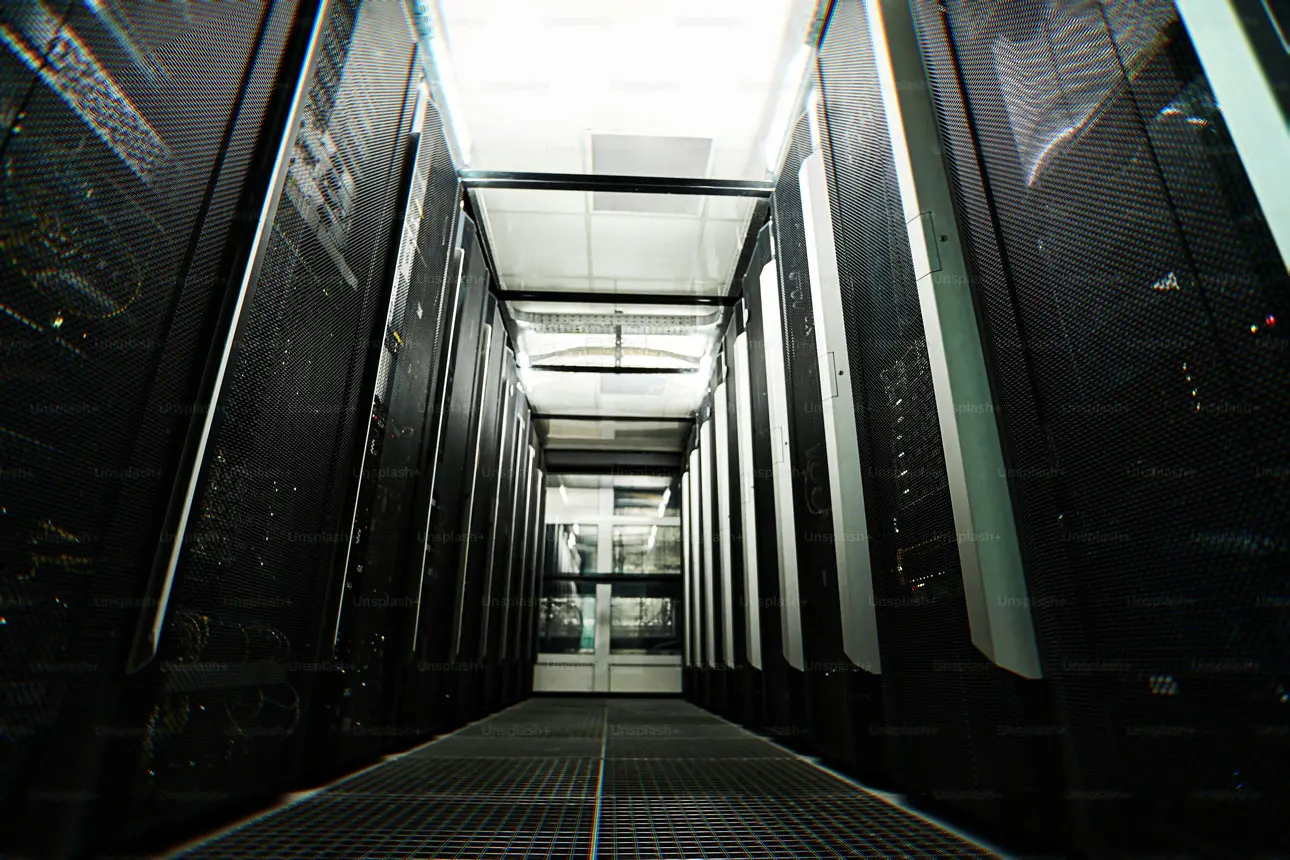
Traditional data center capital expenditure (CAPEX) splits into two roughly equal halves:
IT equipment (~50%) : GPU/CPU servers, network switches, storage arrays. In a 1 MW AI cluster, rack power density can reach 50–100 kW or more, meaning 1 MW supports roughly 10–20 high-density racks.
Infrastructure and power delivery (~50%) : Building shell, substation, transformers, switchgear, cooling systems, backup power, and cabling. Transformers alone can run into millions of dollars, and lead times for large transformers can stretch to 3–5 years.
A critical fact is often overlooked: physical infrastructure costs nearly as much as the GPUs themselves. The total upfront capital expenditure for a complete 1 MW AI data center is approximately $59 million, of which IT load accounts for about $30 million, and infrastructure plus power delivery accounts for about $29 million.
Traditional build costs vary widely by region. Asia-Pacific construction costs rose about 10% year-over-year in 2025. Japan leads at $13–19.2 million per MW, while Taiwan is lowest at $5.2–7.9 million per MW — a maximum cost difference of 2.4x. Site selection alone is a core variable in investment returns.
2. Where containerized solutions create cost advantages
The cost advantage of containerized data centers is not a single technical breakthrough but a structural shift across three dimensions:
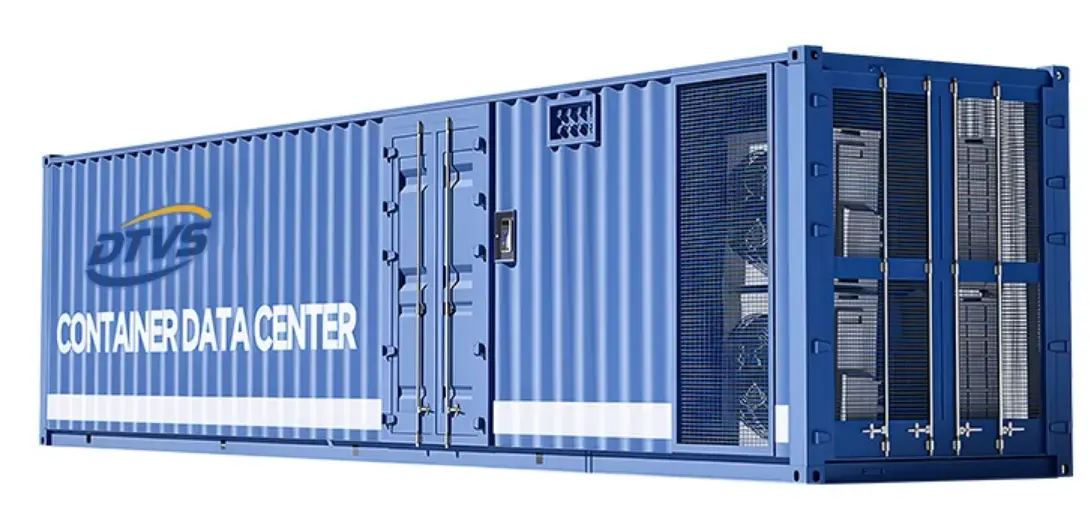
Elimination of civil construction. Traditional data centers require dedicated buildings, involving land acquisition, foundation work, structural shell, and fire code approvals — each a long-lead, high-cost item. Containerized data centers use ISO standard containers as the physical shell, are factory-prefabricated, and require only a concrete pad or hardened surface on site. Construction timelines are reduced by more than 80%.
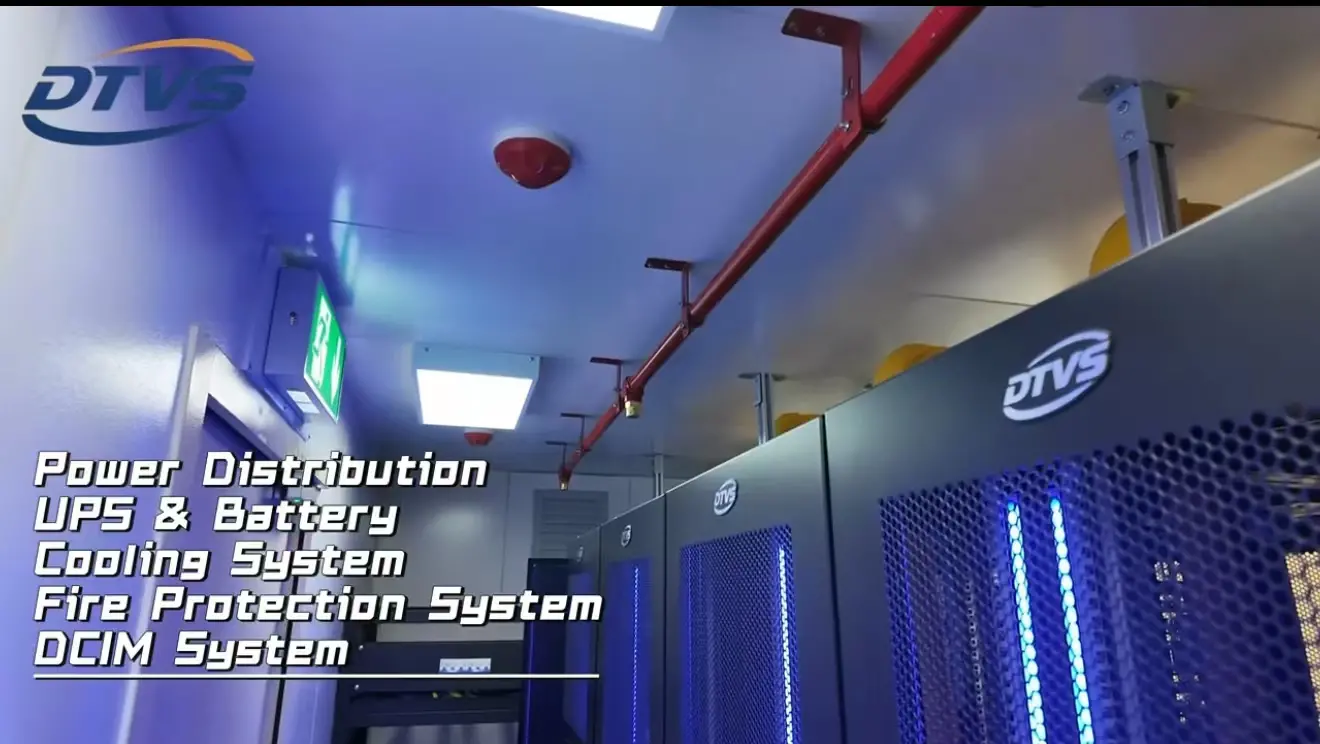
Factory prefabrication replacing on-site labor. Racks, piping, CDUs, power distribution, monitoring, and fire suppression are all pre-installed and tested in the factory. On-site work is limited to connecting water, power, and external cooling. This sharply reduces labor costs, quality risks, and schedule uncertainty. Siemens and Delta modular collaboration data shows that prefabricated modular solutions can reduce CAPEX by up to 20% and shorten construction timelines by up to 50%.
Financing cost differential. A traditional 2–3 year construction cycle means capital remains unproductive for an extended period. Containerized data centers can go from order to online in weeks or even days, dramatically shortening the payback period and reducing balance-sheet financing risk.
SemiAnalysis reports that modular construction can compress data center build timelines by approximately 36% — equivalent to 7–9 months — and reduce total capital expenditure by approximately 8% per megawatt. For hyperscale operators, every month of earlier delivery per megawatt of IT capacity translates to approximately $500,000 in value capture. For a 50 MW facility, accelerating delivery relative to pure on-site construction can generate approximately $200 million in undiscounted benefit.
3. Cost comparison framework: 1 MW project
Cost Item | Traditional Data Center | Containerized Data Center | Notes |
Land / Site Cost | High (dedicated land required, long approval cycle) | Low (concrete pad or hardened surface sufficient) | Containerized solutions have minimal site preparation requirements and can reuse existing land |
Civil / Structural Cost | High (steel or concrete building) | Near zero | The container itself serves as the physical enclosure |
MEP (Power Distribution System) | Medium-High (transformers, switchgear, bus ducts) | Medium (integrated in container, factory prefabricated) | Less on-site installation workload |
Cooling System | Medium-High (chillers, cooling towers, on-site installation) | Medium (integrated cooling, PUE 1.1–1.2) | Air-liquid hybrid cooling can achieve PUE ≤1.15 |
On-site Labor & Commissioning Cost | High (multi-trade coordination, 2-3 year cycle) | Low (site connection completed in days to weeks) | Construction cycle shortened by more than 80% |
Deployment Timeline | 2-3 years | Days to weeks | Directly impacts capital recovery speed |
Annual Operating Cost (Electricity) | PUE typically 1.4–1.6 | PUE 1.1–1.2, WUE can reach 0 | Each 0.1 reduction in PUE saves approximately 876 MWh per MW of capacity annually |
4. When containerized makes the most economic sense
The cost advantage is not absolute. Containerized data centers are most economical under the following conditions:
· Single deployment scale of 1 MW or more. A 40ft standard container holds up to 9–10 standard racks, with standard models supporting up to 10 kVA per rack and custom models up to 20 kVA. Large-scale deployments require multiple containers; economies of scale are needed to dilute unit costs.
· Time-sensitive projects. Temporary compute expansion, event/exhibition support, disaster recovery — where time cost far exceeds equipment premium.
· Edge deployment scenarios. Mining, oil fields, islands, remote base stations — locations that cannot support traditional civil construction.
· Leased-site operations. Containers are mobile and recoverable, avoiding sunk costs.
If the project is small, the site is fixed, and customization requirements are extremely high, traditional civil construction may still be superior. The key is to clearly define your project constraints.
Related reading:
· Air-Liquid Hybrid vs. Air-Cooled vs. Liquid-Cooled: Selecting the Right Cooling Architecture for Containerized Data Centers
· 40ft Standard Container vs. Custom Modular Unit: A Decision Framework for Deployment