
 English
The demand for artificial intelligence infrastructure is exploding at a pace far exceeding expectations. Containerized AI data center solutions have rapidly evolved from an experimental concept to an industry-standard deployment model. The fundamental driver behind this shift is simple: the traditional 18-to-24-month construction cycle for data centers has become an insurmountable bottleneck for hyperscalers, telecom operators, and enterprises racing to deploy GPU clusters.
According to data from 24 Market Reports, the global containerized data center market was valued at $10.86 billion in 2024 and is projected to reach $28.24 billion by 2032, representing a compound annual growth rate (CAGR) of 15.0%. Behind this growth lies a harsh reality: when AI roadmaps demand immediate compute power, no one can afford to wait two years for concrete to set.
Why Traditional Data Centers Struggle to Keep Pace with AI
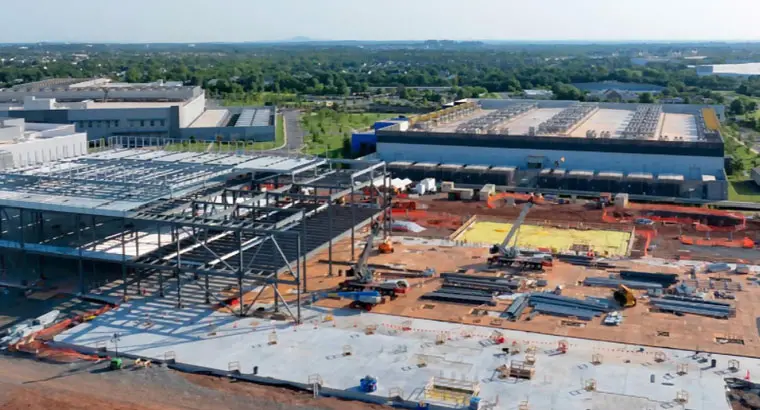
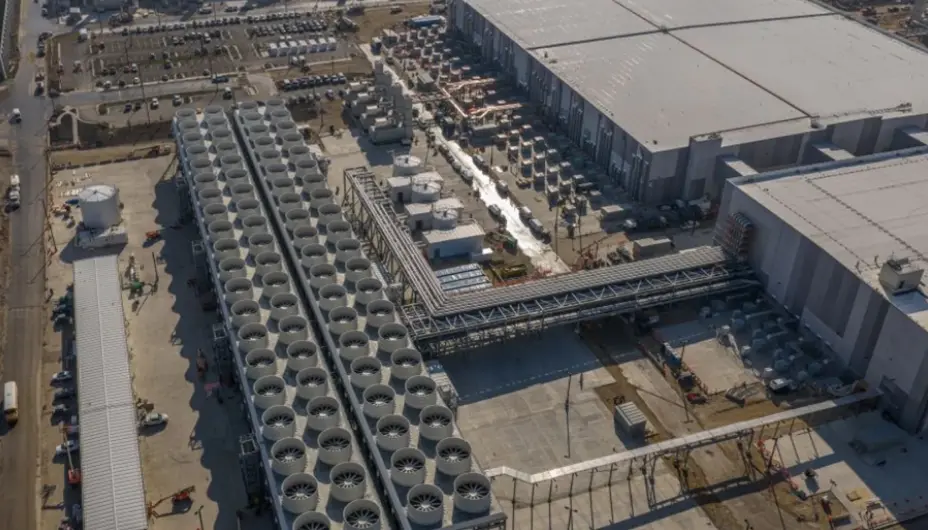
Building a traditional data center for AI workloads involves site acquisition, permitting, civil engineering, power provisioning, and months of on-site integration. Even after construction is complete, commissioning GPU clusters—given their extreme power density and specialized cooling requirements—introduces further delays. According to industry benchmarks, containerized solutions can accelerate deployment speed by 40% to 60% and reduce capital expenditure (CapEx) by up to 30%.
Meanwhile, AI waits for no one. Data from the U.S. Bureau of Economic Analysis reveals that the real value-added of the digital economy grew by 6.3% in 2022, while overall U.S. GDP grew by only 1.9%. Every quarter of delay in AI infrastructure deployment translates to lost revenue, slower model iteration, and a weakened competitive edge.
What Containerized AI Data Center Solutions Deliver
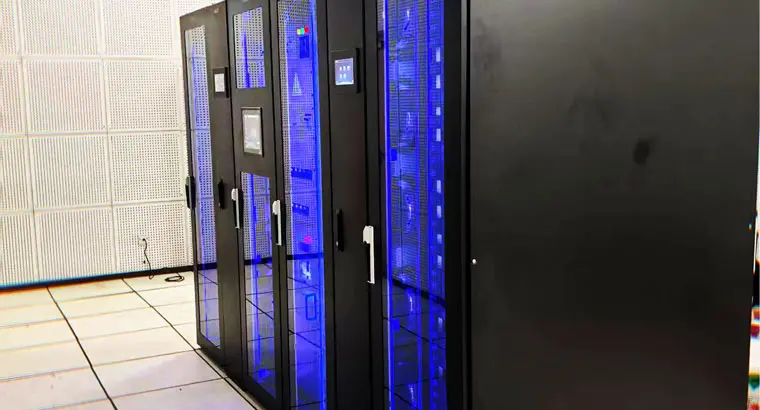
A containerized AI data center solution is a fully integrated, factory-tested computing facility encapsulated within a standard ISO shipping container. It arrives on-site with servers, GPUs, power distribution, cooling systems, security, and remote monitoring already installed and validated. The user's job is to commission it, not build it.
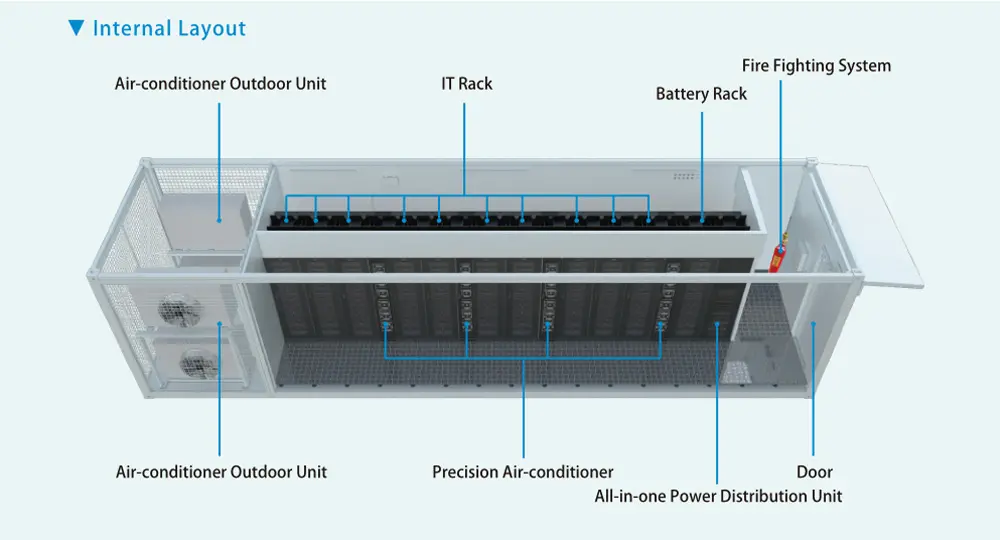
The 40-foot form factor currently dominates the market, accounting for 45% to 52% of installations. These units typically support 400 to 800 kilowatts of power capacity per container—enough to handle serious AI training and inference workloads. While 20-foot options exist for edge deployments, the 40-foot specification offers the compute-per-dollar economics required for AI projects.
This is not a stripped-down, temporary fix. Major cloud service providers have now integrated containerized modules as standard components of their scaling strategies, with approximately 25% of new capacity relying on prefabricated methods. When hyperscalers treat containerized AI data center solutions as core infrastructure rather than a stopgap, enterprise confidence in this model should follow suit.
Speed: From Months to Weeks
Omdia tracking data shows that global containerized data center unit shipments reached 486 units in 2023, a 35% increase from 361 units the previous year. The reason is clear: the average lead time for a ready-to-ship unit is 42 days, compared to the 24 months typically required for traditional facilities. Vertiv confirms that prefabricated modular solutions can save over 40% of deployment time, as manufacturing and testing occur off-site while destination site preparation progresses in parallel.
For AI projects, this parallelization is revolutionary. Procurement teams order the containerized AI data center solution while site teams prepare power and network connections. Eight to twelve weeks later, the unit arrives, and commissioning takes days rather than months. This compressed timeline means data science teams can begin training models on real hardware within a single quarter of placing an order.
Why AI Workloads Demand Containerized Solutions
AI workloads are fundamentally different from traditional enterprise computing. GPU clusters used for training large language models can demand 50 kilowatts or more per rack. Traditional air-cooled data centers struggle to support such high power densities, whereas containerized solutions incorporate liquid cooling and high-efficiency heat dissipation into their design from the outset, solving this challenge at the architectural level.
Every DTVS AI data center is prefabricated in a standard ISO container, with 95% of models pre-installed and tested at the factory. They fully support mainstream accelerators including NVIDIA H100/H200/B200, AMD MI300X, Huawei Ascend 910B/C, and Intel Gaudi. Its AICoolit™ liquid cooling solution integrates direct-to-chip or immersion cooling into standard ISO containers, enabling power densities of up to 100 kilowatts per rack.
The Dual Advantage of Cost and Sustainability
The CapEx advantage of containerized solutions is equally significant. While a traditional 1-megawatt data center costs approximately $2.4 to $2.5 million to build overseas, containerized solutions can compress this cost dramatically. Taking a domestic wind-liquid hybrid compute container as an example, it can reduce the construction cost of a 1-megawatt data center from $2.5 million to under $1.1 million, achieving a PUE as low as 1.2, a WUE of zero, and deployment in just one day.
On the operational side, containerized solutions drastically reduce on-site labor requirements and material waste through factory prefabrication and standardized production. This "plug-and-play" characteristic is particularly critical for scenarios requiring compute deployment in remote areas or regions with abundant power resources but weak infrastructure. The containerized SST DC mobile intelligent compute center utilizes an 800V DC power supply architecture, achieving over 98.5% end-to-end energy conversion efficiency. It can be deployed and put into operation within 24 hours, breaking through the geographical and cyclical limitations of traditional compute infrastructure.
A Paradigm Shift from "Building" to "Manufacturing"
Containerized AI data center solutions represent more than just a technological choice; they signify a shift in mindset: moving from building infrastructure to manufacturing it. This transition equips compute deployment with software-like agility—scale on demand, iterate rapidly, and control risk.
For enterprises planning their AI infrastructure, the core question is no longer whether to adopt a containerized solution, but how fast they can deploy it. When compute demand grows by the quarter, deployment speed itself becomes the competitive advantage.