
 English
The data center industry has crossed a threshold. In 2026, capital expenditure on AI infrastructure is surging toward $700 billion, driven primarily by hyperscaler commitments to GPU clusters and the supporting power and cooling infrastructure required to run them. But the defining challenge is no longer whether the capital exists—it is whether the physical infrastructure can be built fast enough, cooled efficiently enough, and powered reliably enough to keep pace with silicon roadmaps that now iterate annually.
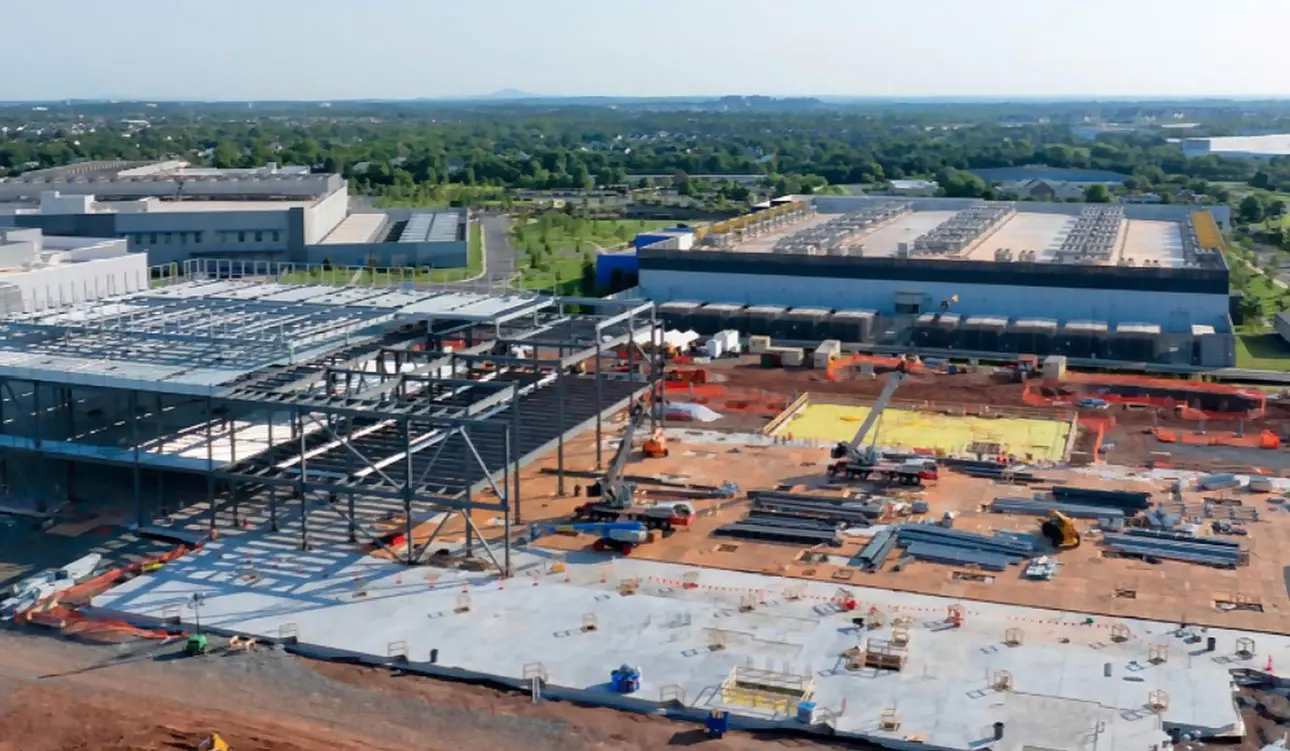
The Capital Flood and Its Bottleneck
Meta's recent $6 billion fiber deal with Corning is emblematic of the scale at which hyperscalers are securing the physical layer of AI infrastructure. NextEra Energy has targeted 15GW of new generation capacity specifically for data center hubs by 2035, reporting 20GW of interest from large load users. Digital Realty launched a $7 billion hyperscale joint venture with Blackstone, expected to deliver 500MW of IT capacity across the US and Europe.
Yet this capital surge is colliding with a hard physical constraint: power availability. Dominion Energy has outlined a long-term strategy for Virginia's power infrastructure that is largely derived from carbon-free sources, but the timeline for new generation and transmission capacity does not match the urgency of AI deployment. Operators are responding by adopting "Bring Your Own Power" strategies and temporary bridging solutions to achieve faster time-to-power, often leveraging modular and prefabricated infrastructure to compress the deployment timeline.
Cooling's Density Frontier: From 4kW to 15kW Coldplates in 15 Months
The thermal challenge has become the most visible technical barrier. CoolIT recently announced a 15kW coldplate design, nearly four times the performance of its 4kW coldplate announced just fifteen months earlier. The design was validated on a thermal test vehicle with standard water-glycol coolant at 1.2 L/min/kW, suitable for 45°C warm-water cooling environments.
The density curve driving this innovation is steep. Nvidia's Blackwell GPUs can operate at up to 1,200W, with its Rubin GPUs featuring thermal design points up to 2,300W. At these levels, air cooling becomes increasingly impractical, and single-phase direct liquid cooling is emerging as the de facto standard for high-density AI systems. As Kamal Mostafavi, CTO of CoolIT Systems, stated: "With validated performance at 15kW, CoolIT has proven that single-phase DLC is not only practical to cool millions of the most advanced AI chips today—but ready to cool the coming generations of GPUs and AI accelerators".
Industry analysts confirm that hybrid approaches—combining air and liquid cooling within a single cold source system—are becoming the new standard for 2026, as operators seek cooling strategies that deliver on today's performance and sustainability goals while remaining flexible enough to handle rising rack densities.
The Modular Acceleration: From Megawatts to Tens of Megawatts
The deployment gap between GPU generation cycles and traditional data center construction timelines has made modular and prefabricated solutions a structural imperative rather than a niche option.
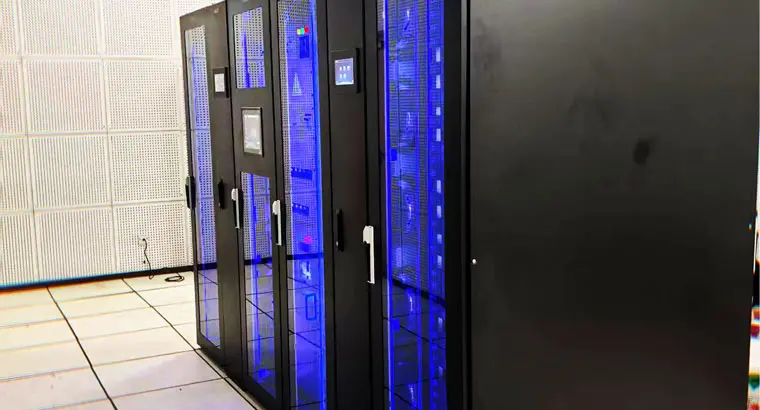
Armada's launch of Orion, a 10MW modular data center, represents a nearly 10x capacity increase over its previous generation. Each Orion module contains compute, networking, power, and cooling within a prefabricated six-module core supporting up to 2,880 GPUs across 40 racks, with Vera Rubin-ready architecture. Units can be delivered within months. The company secured a contract with Nordic-based Fossefall for five Leviathan modules totaling more than 9MW of capacity, scheduled for delivery by Q1 2027.
Vertiv's MegaMod HDX prefabricated solution supports rack densities from 50kW up to more than 100kW per rack. The standard module supports up to 13 racks and 1.25MW capacity, while the extended-height combo configuration supports up to 144 racks and 10MW. As Viktor Petik, senior vice president at Vertiv, noted: "With the MegaMod HDX available in both compact and combo solution configurations, organizations can match their facility requirements while supporting high-density, liquid-cooled environments at scale".
AWS has launched "Project Houdini," an initiative exploring pre-fabricated modular data centers to accelerate construction timelines, while Crusoe has established a modular offering manufactured in its Spark Factory in Colorado. The modular model is no longer a stopgap—it is becoming the primary deployment architecture for AI capacity.
Power Architecture: The Next Design Frontier
As cooling transitions to liquid and racks push past 100kW, the power delivery chain is undergoing parallel transformation. Industry discussions at Vertiv Power Innovation Day 2026 centered on the shift toward high-voltage DC (HVDC) power architecture, with 800V DC cited as a more complex but efficiency-advantageous infrastructure choice for high-density AI deployments. The design philosophy is shifting from treating power and cooling as isolated equipment categories to designing them as an integrated solution.
This integration imperative is reflected in the market. Flex's $4.4 billion acquisition of EPC Power, a developer of 800V data center power architectures including digital rectifiers and solid-state transformers, signals that the power conversion layer is being revalued as a critical enabler of AI infrastructure.
The Road Ahead
The 2026 data center landscape is defined by a fundamental tension: silicon iterates annually, but infrastructure cannot. The industry's response is coalescing around three principles. First, deployment models must shift from build-to-order to manufacture-to-scale, with modular prefabrication and factory testing eliminating on-site bottlenecks. Second, cooling architecture must be designed around liquid as the primary thermal path, with air playing a supporting role rather than serving as the baseline. Third, power and cooling must be designed as an integrated system, with HVDC distribution and liquid cooling loops co-engineered rather than procured as separate equipment categories.
For operators and enterprises planning AI infrastructure, the question is no longer which components to select. It is whether the chosen deployment model can deliver the density, efficiency, and speed that the next three years of AI compute demand will require.